ABOUT MAGNETIC DETECTION...
Since I am the author of this text and I've been sick of these questions for 12 years, I'll start by saying:
- Why do you even need to know about Metal Detection and Magnetic Detection? Get a Jammer + non-metallic shielding fabric and move on, but...
The annoying rookie question I’ve heard thousands of times: "Can the gates react to a magnet?"...
- WHAT??? What do you mean when you ask that? Is the "magnet" a magnetic detacher or is that your misunderstood term for a security tag?
- Magnets and security tags have nothing in common. The slang term "magnet" for a tag entered common usage from heads lacking the necessary brain-sludge to understand EAS fundamentals. If there were a magnet inside the tags, they would stick to metal surfaces.
*Hopefully, in other languages, there isn't this much confusion between a static magnet and an EAS tag.
Standard EAS gates will not react to your magnetic detachers or any magnets. Gates using AM and RF technology wait for a resonance response from a tag in the form of electromagnetic oscillations. A tag consists of non-magnetized ferrite and wire coils—or just a coil without a ferrite core.
I feel better now. Let’s get to business:
Integrating magnetic detection directly into a pedestal is difficult and requires separate computing boards for field analysis.
However, specialized auxiliary pedestals exist for this exact purpose. I observe two main technologies used to sniff out your detachers:
1 The simplest method uses sensitive electronic REED SWITCHES. Inside, a nano-drop of magnetic material reacts to the presence of a powerful magnet nearby. The sensor reads this movement and, depending on the activity level, triggers an alarm. I’ve seen only a few implementations of this tech; they weren't successful or mass-produced because of blind spots and low overall efficiency.
2 A software-driven method analyzing signal phase shifts and very low frequency wave changes. This is more common and significantly more accurate.
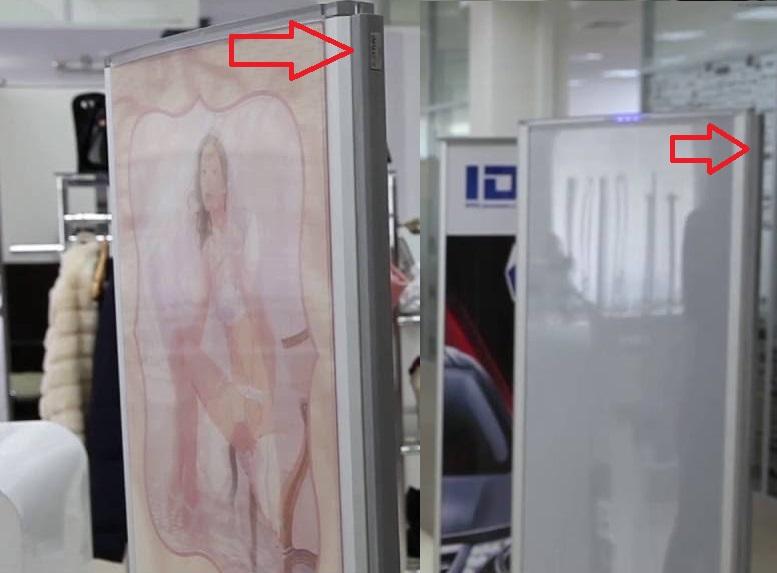
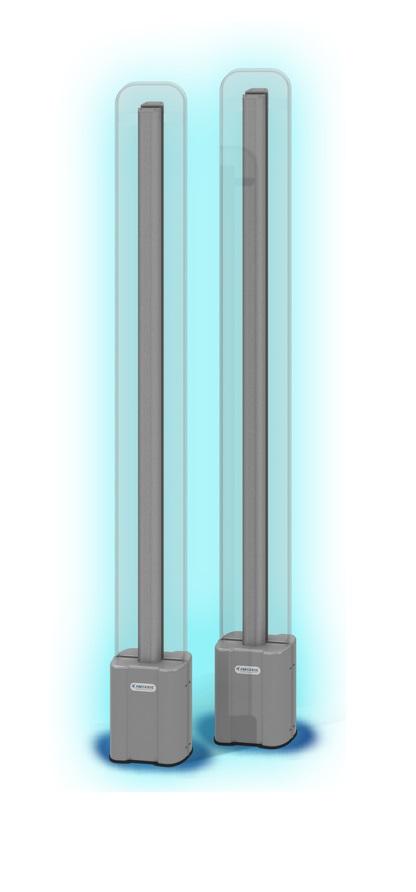
How this affects you in practice?
These systems are integrated only into narrow auxiliary pedestals that usually lack built-in LEDs or speakers. They typically trigger external strobes or remote speakers. If a magnetic detector (MMD) is active, you will usually notice something triggered when you enter. Our research on this topic ended after purchasing an AMERSEC Metal-Magnetic Detector where the option was disabled before it reached us. We found a way to reactivate it via specialized software, but it works inconsistently. If you don't hold the magnet closer than 10cm, it won't trigger.
In Russia, we’ve seen one reasonably stable implementation from DetexLine. It's an auxiliary antenna looking like a 3x2cm vertical plastic strip attached to the edge of AM pedestals. It's easy to spot and clearly looks like an add-on.
In some cases, they install them in fitting room corners. Sensitivity is high if the magnet is brought close. If you see this in a fitting room, just rip out the cable going to the strip—it's usually at the bottom or behind it.
What should you do about it?
- Looking for sci-fi materials to shield your detachers? Don't bother. Humanity hasn't mastered magnetic field shielding yet; otherwise, we’d have anti-gravity drives and flying carpets. The only thing you can test is dissipating the magnetic field density. A metal can with very thick walls might absorb and redistribute the magnetism along its contour, but carrying another kilogram of iron is a tactical burden. Honestly, if you run into MMD, just go to the next store. They are only found in a few out of every thousand stores.
Done. We’re finished with this obscure nonsense that only bothers people obsessed with carrying detachers. Oh wait, that’s most of you. Fine. Enjoy the read, and check the other article for booster bag detection: